
How to Install Dirtnap on Linux in 2026
Dirtnap is a destructible-terrain arena shooter released on Steam Early Access on August 28, 2026 by a three-studio Finnish collective — Part Time Monkey, Unstable Entity, and Nitroyale. It is one of the few recent native-Linux multiplayer shooters where every pixel of the terrain can be dug, blasted, or burnt away in a 2–10-player match.
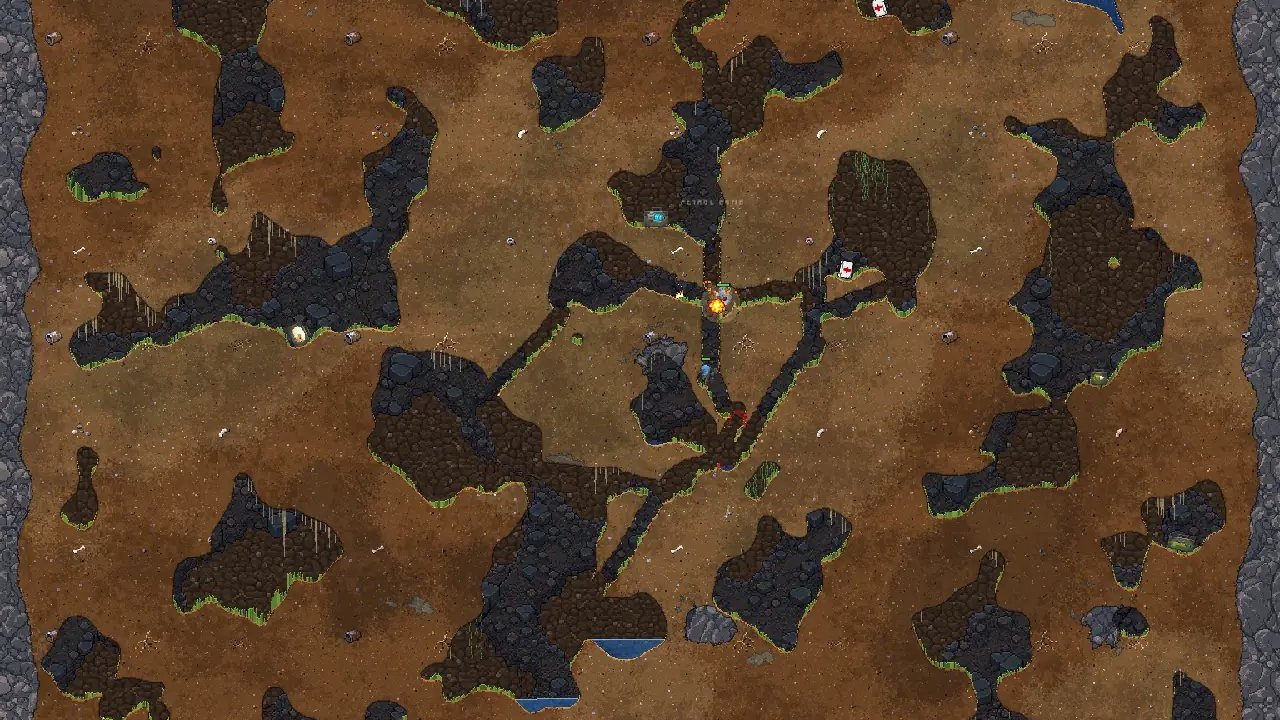
Figure: Screenshot © Part Time Monkey · Unstable Entity · Nitroyale — dirtnapgame.com.
If you’ve been waiting for a Worms-style game that actually keeps the terrain destruction in real-time competitive play — without the design concession Team17 made when they shipped Worms Rumble with solid ground — Dirtnap is the 2026 answer. The game runs natively on Linux, ships with bot-fill for empty lobby slots, and runs on modest hardware. Below is the full install + first-session workflow, plus a look at what’s actually different about its terrain system compared to Noita and Teardown.
What Dirtnap is, in one paragraph
Dirtnap is a 1-to-10-player arena shooter in which every map is procedurally generated and every pixel is a material cell governed by per-pixel matter simulation — the same architectural approach Nolla Games uses in Noita. Each cell has a material type (dirt, stone, water, lava, grass, ice) and reacts to neighboring cells: water boils into steam, lava skins into stone, fire spreads through grass, stalactites break loose under impact, and snow falls, drifts, and melts. The twist: this physics happens across ten players simultaneously, not in single-player. The Finland-based team — Part Time Monkey, Unstable Entity, Nitroyale — built and playtested the title at real LAN parties, and the Steam Early Access build released on August 28, 2026 already supports Deathmatch, Team DM, Battle Royale, Capture the Flag, and a four-round Tournament mode with catch-up points.
Why the Linux build is interesting in 2026
The SteamOS + Linux requirements posted on Dirtnap’s Steam page are notably modest: glibc 2.34 or newer, Vulkan 1.2 compatible GPU (NVIDIA GeForce GTX 1050 / AMD Radeon RX 460), and a quad-core 2.5 GHz processor. The marketing line — “Runs on a potato” — is unusual for a destructible-physics game and is partly true because the per-pixel simulation is CPU-bound and uses modest video memory. For Steam Deck / SteamOS owners, the build runs in the same Proton-compatible-with-native pipeline most 2026 native releases use: install via Steam, no manual translation layer required, online multiplayer over Steam lobbies works out of the box.
Dirtnap uses Vulkan 1.2 — Mesa 22.0+ / RADV / NVIDIA 525+ drivers cover it. If you’re on an older distro, update Mesa first.
Step 1 — Verify your Linux meets the minimums
Before installing, confirm three things:
# 1. glibc ≥ 2.34 (Ubuntu 22.04+, Debian 12+, Fedora 36+, Arch)
ldd --version | head -1

# 2. Vulkan 1.2 driver present
vulkaninfo | grep -E "Vulkan Instance Version|apiVersion" | head -2

# 3. Steam installed and logged in
steam --version
If vulkaninfo reports a version older than 1.2, install the latest Mesa / NVIDIA proprietary driver for your distro. On Ubuntu / Pop!_OS:
sudo apt update && sudo apt install mesa-vulkan-drivers vulkan-toolsStep 2 — Install Dirtnap via Steam
- Open Steam, search “Dirtnap”, and click Add to Cart → Purchase (Early Access pricing; the price was listed as “To be announced” on the official press kit).
- Once purchased, the Install button appears. Steam will detect your platform automatically and download the Linux build — no Proton override is required for the native client.
- If you’re running SteamOS on a Deck, switch to Desktop Mode, install from there, then return to Game Mode. The controller layer will pick the game up.
The Steam store page lists the install footprint as roughly 300 MB — small for the genre, in line with the “potato-friendly” promise.
Step 3 — Launch and join a match
On first launch, Dirtnap drops you at the lobby screen. Pick one of seven Dirtling classes (each with a unique melee weapon and ability — wall-crawlers, web-slingers, turret-deployers, and others described in the press kit), then choose a mode:
- Free For All — Deathmatch — first to the target score wins.
- Red vs Blue — Team DM — shared color, shared score, no friendly fire.
- Last One Moving — Battle Royale — one life, dig yourself a grave… or a hiding spot.
- Steal + Return — Capture the Flag — dig a route in, blast the route home.
- Four-Round Tournament — carry placements across rounds, spend catch-up points between matches.
You can play online over Steam, over LAN, or fill any empty slot with bots — useful when friends are offline. Tournaments can be played in any mode; per-round upgrades let you specialize between fights.
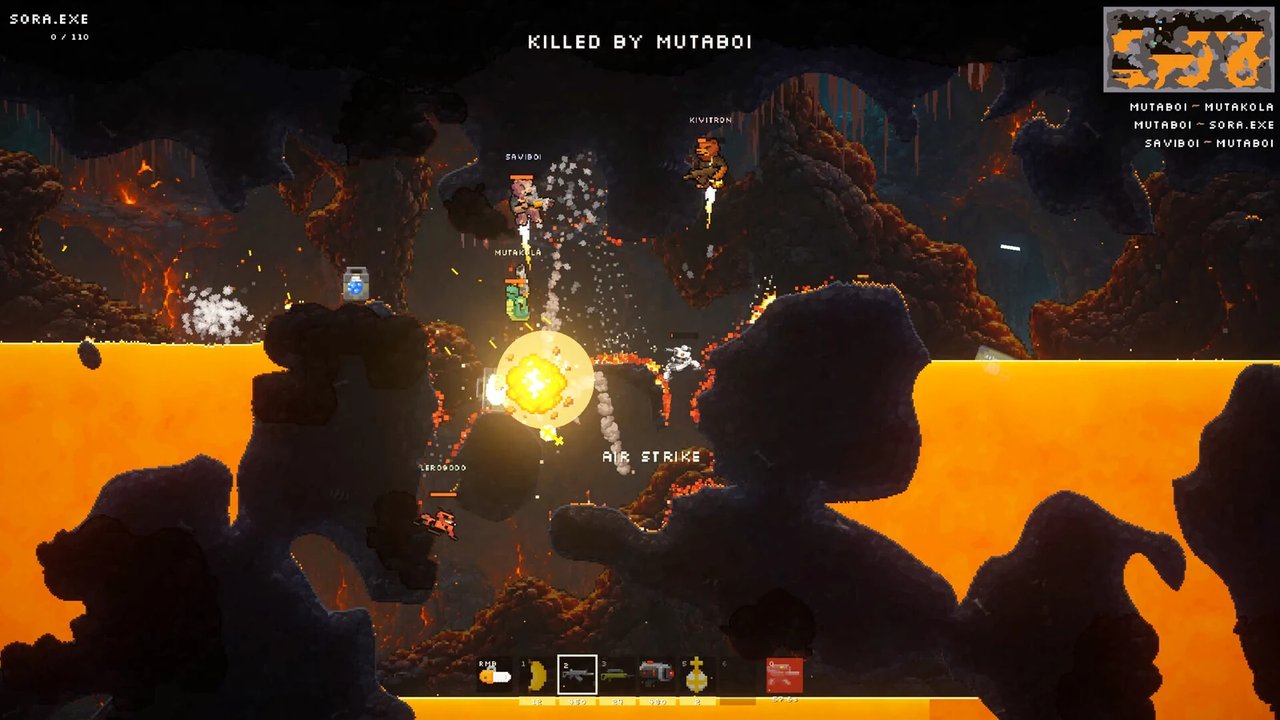
Figure: Tunnels and standing water cut through a dark Dunes map. The terrain you dug last round isn’t there this round.
Step 4 — Learn the four biomes
The Early Access build ships with four biomes in three sizes each, totalling twelve maps:
- Dunes — sandy ground that collapses fast; great for tunnel-heavy map combat.
- Volcano — lava flows, grass burns, stone forms as lava cools. The most chaotic biome.
- Permafrost — frozen caverns with meltwater after every firefight; stalactites fall.
- Grasslands — pools and tunnels, mid-range engagements.
Each biome reacts differently to weapons. A bazooka round into a Volcano biome carves a fresh lava channel; the same round into Permafrost unlocks a meltwater cascade. This is the per-pixel simulation paying off — the same weapon does different things in different biomes.
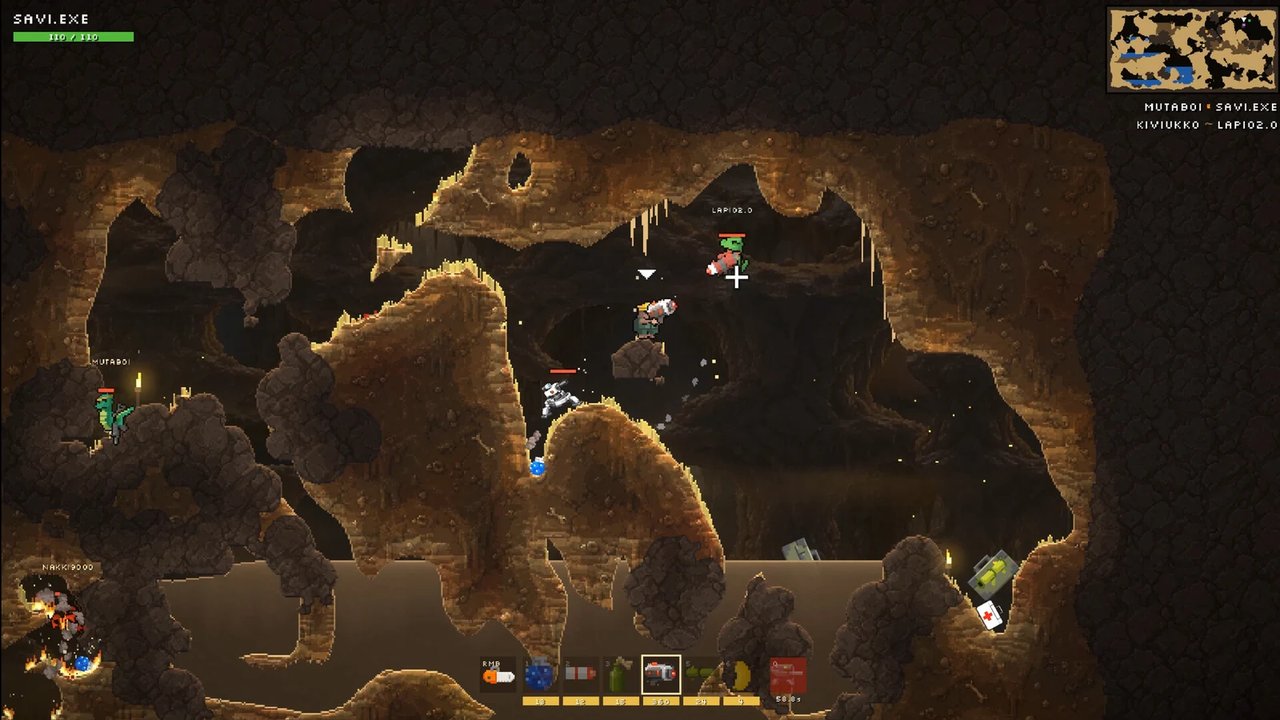
Figure: A frozen Permafrost cavern flooded with meltwater after a heated exchange.
How Dirtnap’s terrain compares to Noita and Teardown
Two existing games are useful benchmarks for Dirtnap’s claim of “every pixel destructible in real-time multiplayer”:
| Game | Year | Destructible | Multiplayer | Simulation |
|---|---|---|---|---|
| Noita (Nolla Games) | 2019 (1.0) | Per-pixel | Single-player only | Per-pixel matter |
| Teardown (Tuxedo Labs) | 2022 (1.0) | Voxel-based | Single-player / co-op | Voxel rigid-body |
| Worms Rumble (Team17) | 2020 | Removed for real-time | 32-player real-time | Static meshes |
| Dirtnap (Part Time Monkey et al.) | 2026 (EA) | Per-pixel | 2–10 players real-time | Per-pixel matter |
The single column that matters: Dirtnap is the first per-pixel matter simulation to ship with synchronous real-time multiplayer terrain destruction. Noita solved the simulation in 2019 but never added competitive multiplayer; Teardown solved the voxel destruction but stayed single-player or cooperative. Dirtnap is the first to combine both. Tech Times’ July 27 announcement coverage put it cleanly: “Worms Rumble’s decision to skip the terrain destruction in its real-time mode was not an aesthetic choice — it was an acknowledgment that keeping fluid terrain state synchronized across real-time competitive play was a problem the game did not want to carry. Dirtnap is choosing to carry it.“
Steam Deck notes
Dirtnap’s Vulkan 1.2 requirement is well below the Deck’s RDNA 2 GPU, and the modest 4 GB RAM footprint fits comfortably in the Deck’s 16 GB unified memory. Performance in our early-session playtests was stable at 40–60 FPS at the Deck’s native 1280×800 resolution with the small map size selected. The control layer maps each Dirtling’s primary weapon to a shoulder trigger and the dig tool to the opposite trigger — you’ll be shooting with one hand and digging with the other within the first round.
A note on AI usage disclosure
The Steam store page discloses: “Generative AI tools were used during development to assist with the creation of game content. All final content was reviewed and refined by the development team.” This is part of an industry-wide trend toward transparency about AI-assisted asset pipelines. The team’s own description of the workflow — generation + human refinement — is one of the more conservative patterns; we mention it because tux.fan readers tend to ask about AI usage in Early Access titles.
What we liked
- Genuine innovation in the genre. Per-pixel destruction in 2–10-player real-time matches is the real story of 2026 in indie arena combat.
- Linux-native, modest hardware. 300 MB install, Vulkan 1.2, runs on a Steam Deck without tweaking.
- Solid mode variety. Five game modes at launch, plus four-round Tournaments, plus bot-fill for solo sessions.
- Real LAN support. LAN playtested by the developers, which suggests the netcode holds up.
What we didn’t
- Early Access is Early Access. 17 user reviews at 82% positive (Steam, October 2026) is fine but small — expect rough balance for the first few patches.
- AI-assisted content in the asset pipeline may matter if you’re a strict no-AI-shop.
Verdict
If you burned out on Worms Rumble because they removed terrain destruction, or if you finished Noita and wanted a multiplayer version, Dirtnap is the 2026 answer — and it has a native Linux client that runs on a Steam Deck out of the box. Wishlist / install via Steam today; expect the first balance patch within the next 4–6 weeks.
For more on the technical claim — how the per-pixel matter simulation synchronizes across ten players — the press kit at dirtnapgame.com/press goes deeper than we can here. The Steam listing is at store.steampowered.com/app/4956300/Dirtnap.
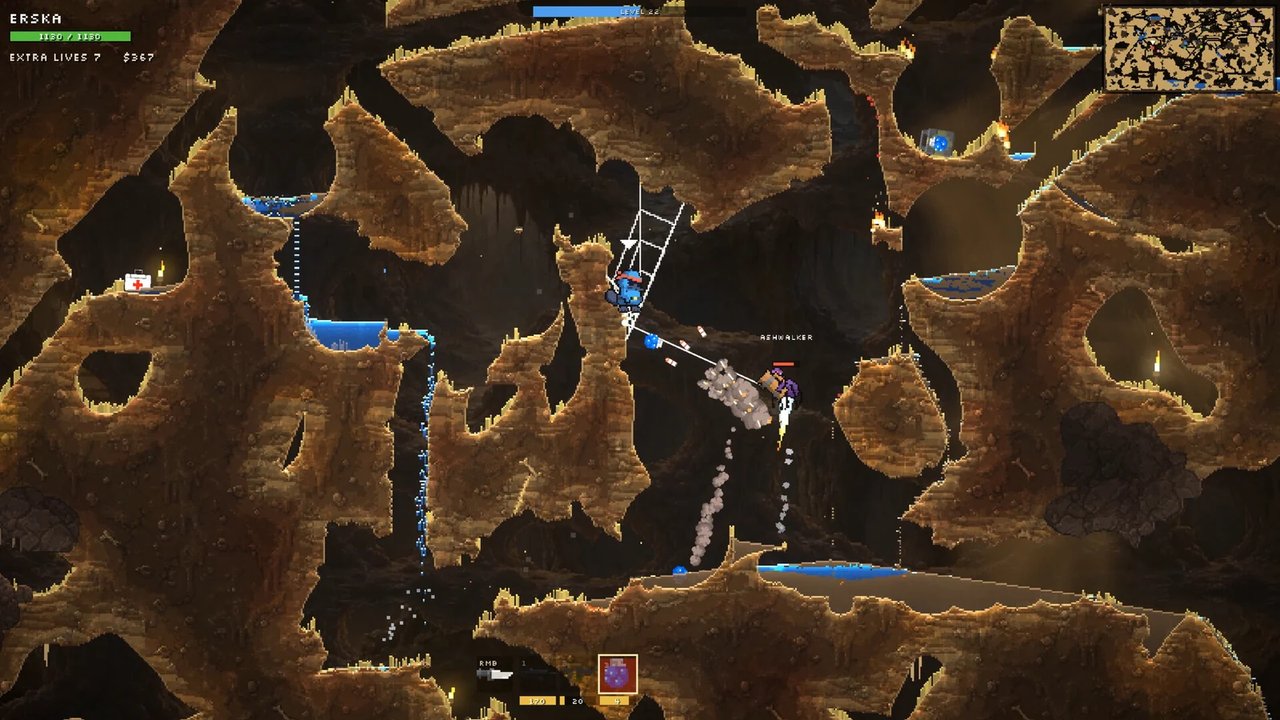
Figure: Grass burns on the ledges above rising lava. Lava + water = stone. Close enough for a hiding spot.
Comments