
Debian 13 Trixie in 2026: 13.7, Bullseye EOL and Duke
Debian rarely makes headlines. It has no release train, no splashy keynote, and no marketing department. But in the second half of 2026 the project has quietly done something more interesting than shipping another release: it retired a generation, handed another one over to a different support team, and started naming the release after the one that comes after next.
As of this writing, the stable branch is Debian 13 “trixie” at point release 13.7, released on September 12, 2026. The oldstable branch, Debian 12 “bookworm”, passed security support to the Long Term Support team in July. And the oldest supported branch, Debian 11 “bullseye”, reached the end of its LTS term on August 31, 2026. Meanwhile the project has already announced the codename for Debian 15: Duke.
So here is the actual state of Debian in 2026 — what changed, what it means for you, and what to watch next.
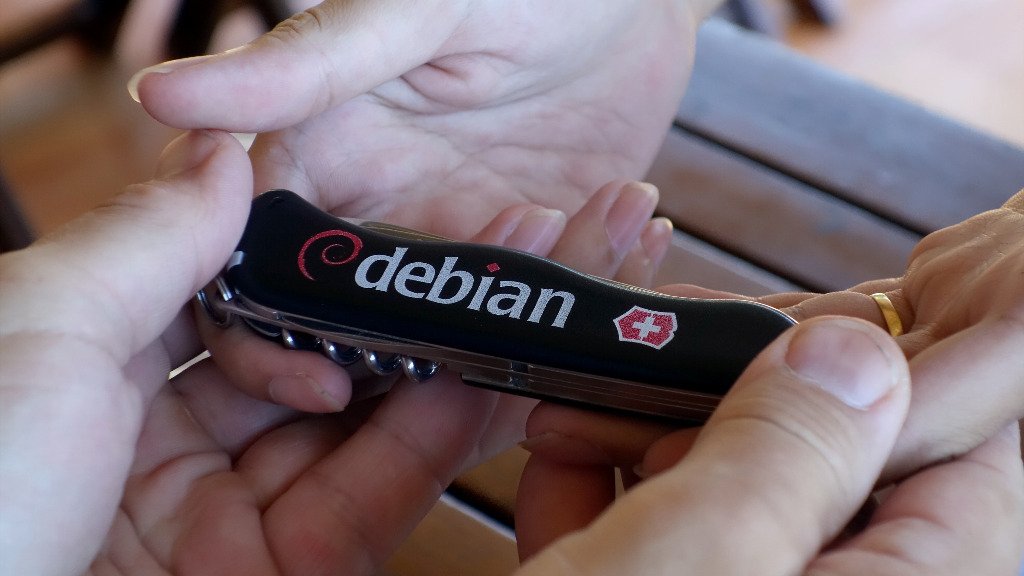
Figure: Debian describes itself as a swiss army knife of software. Official photo from debian.org.
Debian 13.7: a point release that is almost entirely security
Debian 13.0 shipped on August 9, 2025. The seventh point release, 13.7, landed on September 12, 2026, and its own announcement describes it as adding “corrections for security issues, along with a few adjustments for serious problems.”
That framing understates the size of the batch. The security advisories fixed in 13.7 include a heap overflow in alsa-lib (CVE-2026-25068), buffer overflows in glibc (CVE-2026-5928 and CVE-2026-5450), a long list of ImageMagick memory-safety and policy-bypass issues, privilege escalation and information disclosure bugs in libvirt, signature-injection and validation flaws in mbedtls, an arbitrary code injection issue in ansible-core (CVE-2026-11332), and path traversal fixes in incus and dcmtk. glibc also picked up Linux 7.0 header compatibility along the way.
The important operational detail is that this is a point release, not a new version. You do not reinstall. You point APT at a current Debian mirror and upgrade in place, and if you already pull updates from security.debian.org you will find that most of those fixes are already folded in. The Debian Installer was updated with the same corrections, so new installation media carry them too.
For a distribution whose entire reputation rests on not breaking things, a point release that is 90 percent CVE fixes is exactly the intended behaviour: trixie is stable, and the security team keeps it stable by patching rather than by shipping new base packages.
The support squeeze: Bullseye out, Bookworm to LTS
The more consequential story of 2026 is the support lifecycle, and it is easy to miss because nothing about it announces itself loudly.
Figure: The Debian LTS badge marks the extended support phase. Official image from debian.org.
On August 31, 2026, Debian 11 “bullseye” reached the end of its Long Term Support. Bullseye had a five-year life cycle like every Debian release, and its additional two LTS years are now over. On July 12, 2026, security support for Debian 12 “bookworm” was handed over to the LTS team, which means bookworm has left the phase where it receives new kernel and driver packages and has entered the phase where it receives backported security fixes only.
The distinction matters more than it sounds. A Debian release gets three years of full support, meaning new kernel versions, new drivers and new hardware enablement, followed by two years of LTS, meaning security patches for what is already installed. When bookworm crossed into LTS, it moved from tracking the kernel to freezing it.
If you are running bullseye today, you are now past the end of the road. Your options are to upgrade to trixie, upgrade to bookworm, or pay a third party for extended support that Debian itself no longer provides. If you are on bookworm, you are fine, but you should know that your kernel is now a fixed version rather than a moving one, and that a future trixie-to-Debian-14 upgrade will eventually be needed to get current drivers again.
What is actually in trixie
Debian 13 was a large release even by Debian standards, and its headline numbers are worth remembering:
- More than 14,100 new packages, bringing the total to roughly 69,830
- Over 63% of packages from Debian 12 updated
- Around 44,326 packages updated, 8,840 obsolete packages removed
- Linux kernel 6.12 LTS series, systemd 257, glibc 2.41, GCC 14.2
- PHP 8.4, Python 3.13, Rust 1.85, PostgreSQL 17, MariaDB 11.8, OpenJDK 21
- OpenSSL 3.5, OpenSSH 10.0p1, curl 8.14.1, Samba 4.22, Nginx 1.26
- LibreOffice 25.2, GIMP 3.0.4, Inkscape 1.4, Emacs 30.1, Vim 9.1
- LLVM/Clang 19 as the default compiler, with 17 and 18 also available
For desktop users the most visible part is the choice of environments. Trixie can be installed with GNOME 48, KDE Plasma 6.3, LXDE 13, LXQt 2.1.0, Xfce 4.20, and the live images add Cinnamon and MATE. That is still the widest desktop selection of any major distribution, and it is the single strongest reason to pick Debian over a single-desktop alternative.
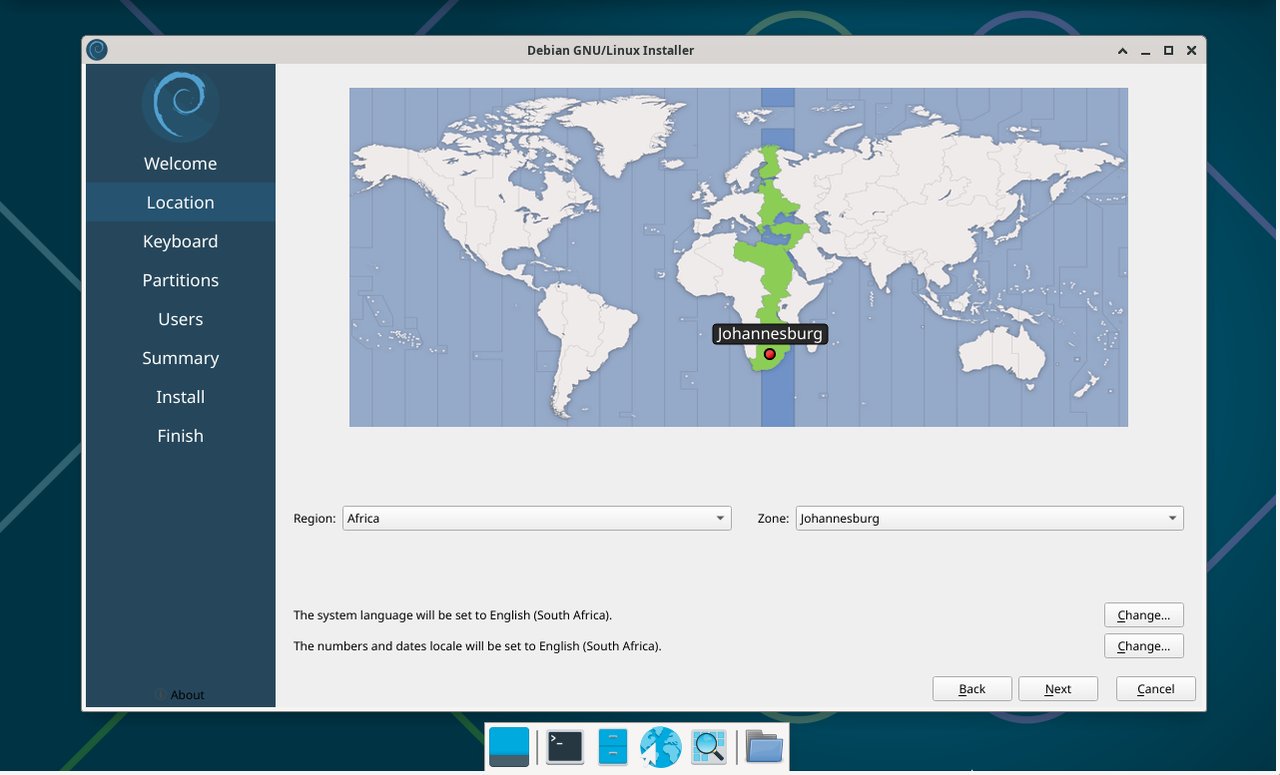
Figure: The Debian GNU/Linux Installer. Official screenshot from debian.org.
Two smaller trixie changes tend to age well. First, all architectures except i386 now use a 64-bit time_t ABI, so timestamps past the year 2038 are no longer a cliff edge. Second, the release made real progress toward byte-for-byte reproducible builds, and you can check your own installation with the new debian-repro-status package or watch the project-wide numbers at reproduce.debian.net. Installation is available in 78 languages, and the installer and live images can now boot over HTTP Boot on supported UEFI and U-Boot firmware, which finally makes netboot installs of the current release practical on some embedded boards.
The architectures are thinning out
Debian 13 officially supports seven architectures: amd64, arm64, armhf, ppc64el, riscv64 and s390x, with i386 as a co-architecture for running 32-bit software.
riscv64 is the headline addition. Trixie is the first release with official RISC-V 64-bit support, so you can install a normal Debian userland on 64-bit RISC-V hardware and get the full feature set.
The other direction is subtraction. i386 lost regular support: there is no official kernel and no Debian installer for i386, it exists only so that 32-bit binaries can run on 64-bit amd64 machines, and the release notes explicitly warn not to upgrade i386 systems to trixie. The recommendation is to reinstall as amd64 or retire the hardware. armel is deprecating too — trixie will be the last release for that architecture, and it is supported only for upgrades, not new installations. Both will be removed in a future release.
The practical effect is that the set of supported architectures shrinks during each LTS term, and trixie is where the first real thinning is visible. If you maintain an i386 or armel fleet, trixie is your last easy upgrade window.
The road ahead: Forky and Duke
Debian 14 “forky” is the current testing branch, which means it collects the newest upstream software and is where breakage happens first. It has no release date set. Meanwhile Debian 15 “Duke” has had its codename announced with all dates still to be determined, and the call for Debian 14 artwork closed on November 26, 2026, which is a good sign that forky is the version being actively prepared.
The governance side is settled for now. Sruthi Chandran was elected Debian Project Leader in April 2026, taking office on April 21 and running through April 20, 2027, with 347 of 1,039 developers voting by Condorcet method. DebConf26 was held in Santa Fe, Argentina, with more than 270 attendees from 35 countries across 90 events, and DebConf27 will take place in Asahikawa, Hokkaido, Japan, from September 5 to 11, 2027. The project also marked its 33rd anniversary on August 16, 2026.
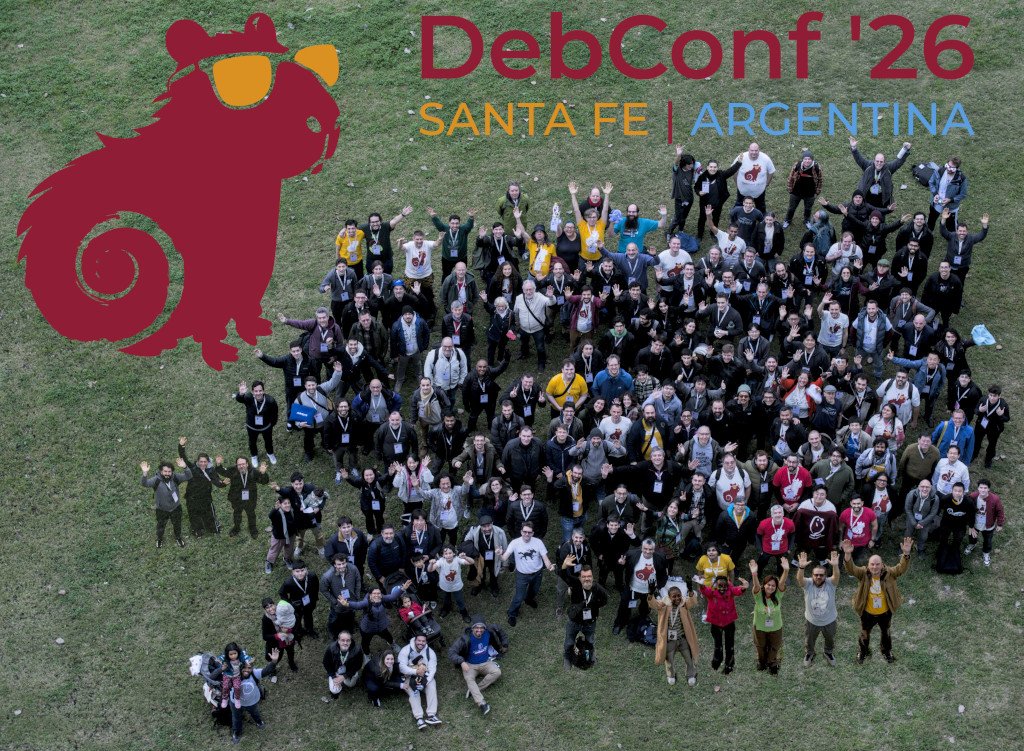
Figure: DebConf26 in Santa Fe brought Debian developers together. Official photo from debian.org.
Development is not only happening at the main conference. The MiniDebConf series continues to hold smaller regional meetings — Hamburg and Campinas both hosted events in 2026.
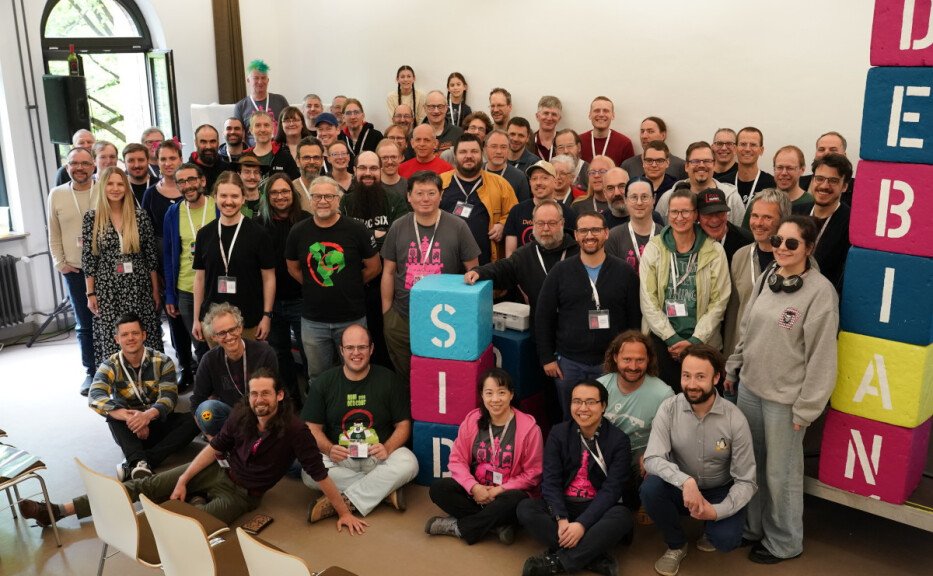
Figure: MiniDebConf Hamburg 2026. Official photo from debian.org.
So what should you do?
If you are starting fresh in 2026, install trixie 13.7. It has the widest desktop choice, the most current stable package base, and a point release that is essentially a security refresh. Pick your live image by desktop environment rather than by habit.
If you are on bullseye, treat this as the end of your runway. LTS ended on August 31, 2026 and the sensible move is a direct upgrade to trixie, ideally from a tested snapshot rather than on the day of the release.
If you are on bookworm, you are still supported and still safe, but you have crossed into LTS. Upgrade to trixie when you want current kernels and drivers, not because you must.
If you are a developer or server operator, trixie is the more interesting choice right now anyway: PHP 8.4, Rust 1.85, Clang 19, PostgreSQL 17 and systemd 257 are all recent enough to build and ship modern software against, and the reproducible-build progress means you can increasingly verify your own artefacts against upstream.
The verdict
Debian in 2026 is doing the thing Debian has always done, but the timing makes it look busier than usual. A stable release absorbing a heavy security batch without changing anything for users. An oldstable branch moving into its frozen phase. A legacy branch finally running out of road. A new RISC-V architecture landing at the same moment two old ones are being retired. And a codename announced for the release after next.
None of this is dramatic, and that is the point. If you want a distribution that is not trying to be the newest thing in the room, trixie 13.7 is a good place to be in 2026.
The project home is https://www.debian.org/, and the current stable release information is at https://www.debian.org/releases/13/.
Comments