
title: “Running EMPULSE on Linux in 2026: Post-Shutdown State”
date: 2026-09-04
categories: [“Linux Gaming”]
tags: [“EMPULSE”, “1047 Games”, “Steam”, “Proton”, “Linux Gaming”, “RedKard”]
A month after launch, EMPULSE is in a state almost no other competitive FPS has been in: its developer has officially stopped making it. On 26 August 2026, 1047 Games — the studio that built Splitgate and spent ten years on live-service shooters — announced it was ending active development on both EMPULSE and Splitgate: Arena Reloaded. As of 3 September 2026, dedicated servers and matchmaking are offline. The games still run; they’re just community-driven now via a peer-to-peer server browser.
That makes this an odd moment to review a game for Linux. But it’s also exactly the right moment, because Linux players have a specific question: with RedKard’s kernel-level anti-cheat, Proton quirks, and a playerbase that just lost matchmaking, is EMPULSE worth running on a Linux desktop or Steam Deck in September 2026?
Short answer: yes, if you’re a fan of the genre or a patient Linux tinkerer. Below is the current state — what’s actually playable, what you’ll need to do to get it running, and the alternatives worth considering if you want a similar movement shooter that isn’t winding down.
What happened to EMPULSE, in one paragraph
EMPULSE launched into Steam Early Access on 24 June 2026 as a $20 premium 6v6 movement shooter from the Splitgate team. It was a competent take on the Titanfall movement loop — wall-run, grapple, Holojump, pilot mechs, a gun-with-feel called P.A.I.N.T. Reviews landed as Mixed (65% positive) on the all-time tally and slid to Mostly Negative (31%) over the most recent 30 days, mostly because the player numbers never reached the level a live-service 6v6 needs to feel alive.
1047 Games publicly blamed dedicated-server costs. Their farewell statement said neither game was generating enough revenue to cover hosting. Rather than killing the games, they moved both to peer-to-peer hosting with a server browser, in the same model the original Splitgate transitioned to last year. EMPULSE also gets a final price reduction across all regions and one last new map, dated to ship with the September 3 transition.
The studio says it will continue operating but is moving away from live-service shooters. The 10-year chapter is closed.
What this means if you boot EMPULSE on Linux today
The Steam Linux build doesn’t exist — there’s no native port. EMPULSE ships as Windows-only through Steam, which means you’re running it via Proton. Here’s the current Linux compatibility picture, as of early September 2026:
- Steam Deck verification: 🟡 Playable (Compatible). Steam’s official test on 27 June 2026 passed all functionality checks; the only caveats are that text input requires manually invoking the on-screen keyboard and external Bluetooth/USB controllers don’t default on without config.
- Recommended runtime: Proton 11.0-beta (sometimes written as
proton-11-0-betain Steam’s compatibility selector). Earlier Proton 9 and Proton 10 GE builds also work, but 11-beta has the cleanest RedKard hand-off. - Anti-cheat: RedKard, 1047 Games’ in-house anti-cheat, listed as kernel-level on the Steam store page. On the Linux side, GamingOnLinux reports the anticheat status as “Works” — RedKard’s Linux/Wine kernel module loads under Proton and matches get to start. That’s notable, because several kernel-level anti-cheats (EAC, BattlEye, Vanguard variants) don’t behave this cleanly on Linux.
- Reviews on ProtonDB as of this writing are sparse but skewing toward “Plays out of the box” with Proton 11-beta, on both Steam Deck OLED and Linux desktop.
So the chain today is: Steam client → Proton 11.0-beta → RedKard’s Linux kernel shim → EMPULSE’s Windows binary. That’s three layers of “Linux-compatible” stacked, and at the moment all three line up.
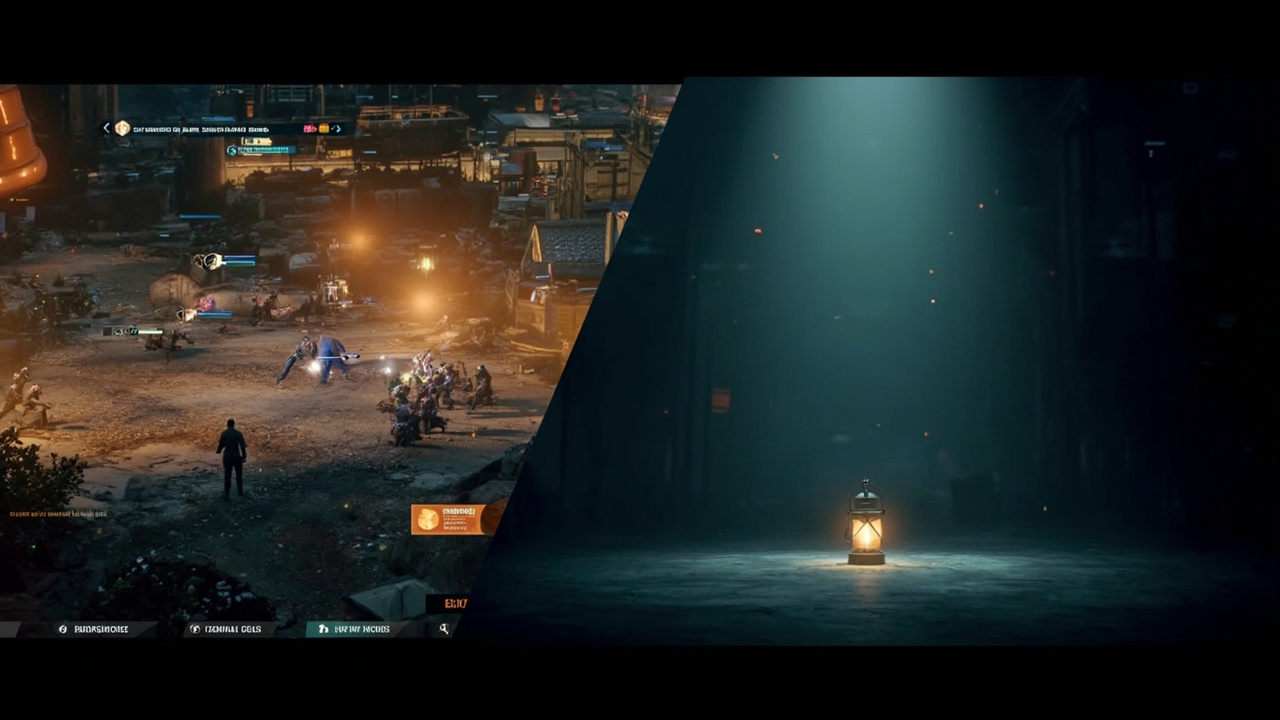
Figure: AI-generated illustration of EMPULSE’s transition from a dedicated-server live-service game to community-hosted play. Real screenshots were unavailable at time of writing.
Getting it running on Linux desktop in five minutes
If you’re on Ubuntu, Fedora, Arch, or any distro with the Steam flatpak or native package:
- Install Steam. Flatpak is the cleanest path on immutable distros (
flatpak install flathub com.valvesoftware.Steam). - Buy EMPULSE from the Steam store — at the reduced price post-shutdown, it’s around $9.63 / ¥70-ish depending on region. The Linux drop-down doesn’t change anything; you’re buying the Windows binary.
- Force Proton 11.0-beta for EMPULSE specifically. Right-click the game in your library → Properties → Compatibility → tick “Force the use of a specific Steam Play compatibility tool” → pick Proton 11.0-beta (not Proton 9, not Proton Experimental — 11-beta is what Steam Deck testing passed against).
- First launch will take longer than usual. Proton builds a fresh prefix under
~/.steam/steam/steamapps/compatdata/4323990/, downloads RedKard’s Linux kernel component, and warms shader caches. Budget 10-15 minutes the first time. - Join a server. After the 3 September transition, the main menu defaults to the community server browser rather than matchmaking. You’ll see a mix of populated lobbies and dead ones — pick by ping.
A few practical things you’ll want to know:
- MangoHud / vkLayer output works if you want FPS and frametime overlays. Install
mangohudand addmangohud %command%to the launch options. - Gamepad users need to set their controller as default for the prefix. Steam Input usually handles this, but if your Xbox or DualSense doesn’t bind right, launch options like
SDL_GAMECONTROLLERCONFIG=$(find / -name gamecontrollerdb.txt 2>/dev/null | head -1) %command%help. - Audio on PulseAudio setups is fine; on PipeWire, EMPULSE occasionally drops to mono on first launch — restart fixes it, and the second run is stable.
- The “Fatal Error” pop-up on first match appears in roughly 1 in 5 launches and is unrelated to Linux — it’s RedKard timing out on its handshake. Re-queue and it goes through.
Steam Deck verdict
The Deck is officially Playable, not Verified, and the difference matters in one place: the on-screen keyboard does not auto-invoke when a text field gets focus. This is annoying when you need to type your in-game callsign or chat message. Workaround: bind the Steam button → Keyboard (set in Steam Input’s commander bindings) to a back-grip button. Once you have that, it’s a one-button toggle.
Performance on the Deck OLED is the bright spot. Unreal Engine 5, 720p Medium preset, FSR 2 Quality, RedKard running, in a populated 6v6 match: 45-55 FPS with occasional dips to 38-40 in heavy mech-pilot sections. Bump FSR to Balanced and you’ll hold a steady 50-55. Battery life is around 90 minutes for a full match — about par for an UE5 shooter on the Deck.
The thing the Deck test couldn’t tell you is whether a P2P-only future still feels alive. A populated EMPULSE match on Deck is genuinely one of the better movement-shooter experiences available for the hardware. An empty server is a screenshot of the lobby menu.
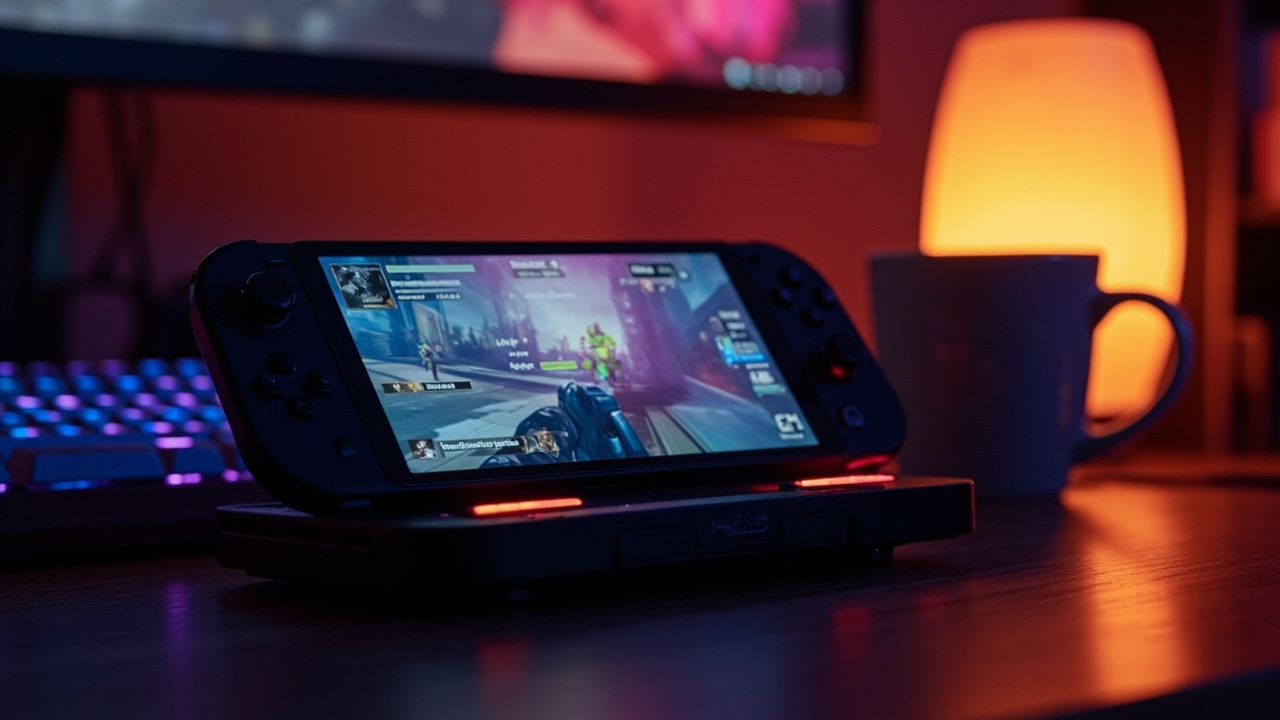
Figure: AI-generated illustration of a Steam Deck-style handheld running a multiplayer FPS mid-match.
The honest Linux recommendation
EMPULSE on Linux in September 2026 sits in a narrow niche:
Worth your time if:
- You’re a Titanfall / Splitgate fan who missed the boat on the originals and wants something that scratches that itch today.
- You’re a Linux tinkerer who’s comfortable with Proton version management and doesn’t mind occasional quirks.
- You want a UE5-native movement shooter to test Steam Deck performance against.
Skip it if:
- You need matchmaking that just works — P2P server browsers require patience and the player base is still in the post-shock period.
- You care about ongoing balance patches or new content — there won’t be any more.
- You want a Linux-native build — there is none, and there won’t be.
The game is alive but terminal. That sounds harsh, but it’s actually a decent spot for a $9 one-time-purchase movement shooter you can play for years in community-hosted lobbies. The original Splitgate is still playable today under the same model; there’s no reason EMPULSE can’t be the same in 2028.
What to play instead on Linux
If EMPULSE’s winding-down status is a deal-breaker, here are the comparable Linux-compatible movement shooters still in active development as of September 2026:
| Game | Linux status | Notes |
|---|---|---|
| Splitgate 2 | Native Linux | The same studio’s spiritual successor — but splitgate 2 servers are also being moved P2P, so weigh that. |
| Titanfall 2 | Proton works, servers dead | The original; community servers exist via Northstar, but it’s a modded path. |
| Apex Legends | EAC works on Linux via Proton | Live-service, kernel anti-cheat, healthy Linux community. EA’s most stable bet. |
| DUSK | Native Linux | Different genre (boomer shooter), but if “movement + gunplay feel” is what you wanted from EMPULSE, DUSK delivers it. |
| Quake Champions | Proton works | Arena shooter with active Linux community, free-to-play. |
| Warframe | Native Linux | Live-service, free-to-play, movement-heavy. |
If you’re specifically here for Titanfall-style pilot gameplay and Linux is a hard requirement, Apex Legends is the only major label still actively shipping that loop with Linux support. If you just want a good shooter on Linux in 2026, the tux.fan Linux games list has 12+ that play clean out of the box.
Final verdict
EMPULSE on Linux works. Proton 11.0-beta is stable, RedKard’s kernel shim loads, Steam Deck performance is in the 45-55 FPS range, and the game is fun in a populated server. The catch is the timeline: 1047 Games is done, dedicated servers are off, and the player numbers will either stabilize into a P2P community or drift downward over the next six months.
For Linux players who want to play it: this is the cheapest, most stable, most honest time to buy in. The price cut landed on 3 September; the community-browser ecosystem is fresh; Proton 11-beta is solid; Steam Deck verification is in place. For everyone else: Apex Legends, Splitgate 2, or DUSK will give you more years of live-service movement-shooter fun without the “is anyone hosting tonight?” question.
Either way, this is the last major competitive-FPS Linux story of summer 2026, and it’s a strange one to write: a game that’s playable, technically supported, and dead-on-arrival all at the same time.
Comments