
If you have ever wanted to play Heroes of Might and Magic II on a modern Linux box without wrestling with a 1996 DOS executable, the open-source engine fheroes2 has been the answer for years. This week it got substantially better. Version 1.1.18 was tagged on GitHub on 8 November 2026 and announced publicly on 9 November, landing a large batch of AI, editor and interface improvements — and, just as importantly, ending a release drought that had stretched far longer than the project’s usual cadence.
The team was blunt about why. The release notes describe the gap as “a very long delay and endless waiting”, and explain that it resulted from personal matters affecting several core team members, now resolved. Their promise for what follows: the next release “will arrive much sooner than you expect”.
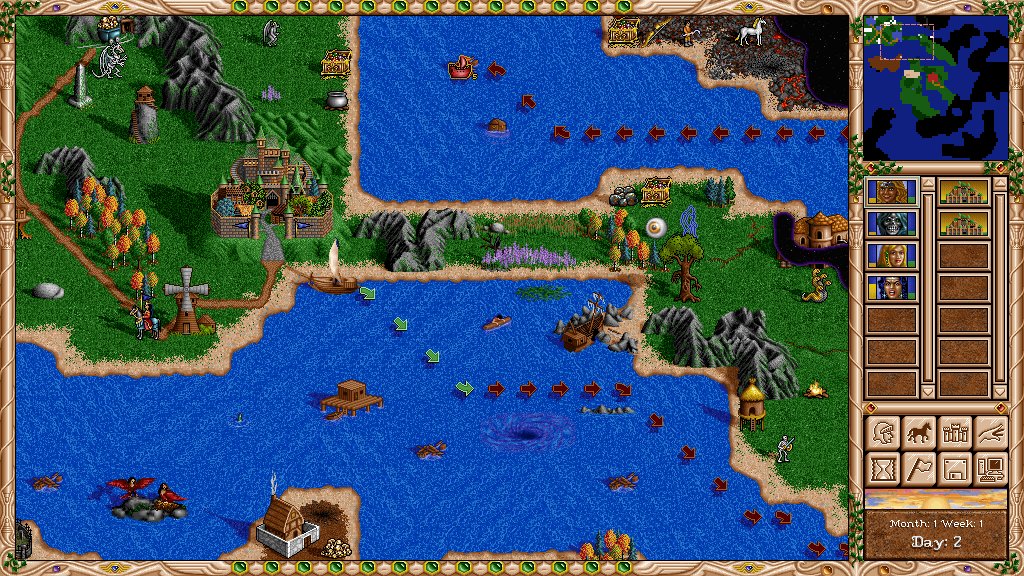
Figure: Official fheroes2 in-game screenshot of the adventure map, sourced from ihhub.github.io/fheroes2.
Here is what 1.1.18 actually changes, and how to get it running natively on Linux.
What fheroes2 actually is (and what you still need)
fheroes2 is not a port and it is not a wrapper. It is a from-scratch reimplementation of the Heroes of Might and Magic II engine, written in C++ and distributed under the GNU General Public License v2.0, with the project’s art assets under CC-BY-SA 4.0. The source lives at github.com/ihhub/fheroes2, and the project maintains its own documentation site at ihhub.github.io/fheroes2.
The legal split matters and is worth stating plainly. The engine is open source; the original game data is not. To play, you need the ANIM, DATA, MAPS and MUSIC directories from a copy of Heroes of Might and Magic II that you own — usually the Gold Edition from GOG or the Ubisoft Store, or the free English demo. The project explicitly does not support any illegal use of the original resources, and every Linux install method asks you to pick one of three legitimate paths on first launch: install the GOG version (recommended, and it extracts the resources itself), do a manual copy, or install the demo.
So why bother, when the original DOS release still exists? Because fheroes2 is not just “HoMM2 but native”. The project’s own features and enhancements page lists high-resolution support, a hotkey list with full rebinding, an instant-battle option, hex-based movement highlighting for large creatures, dedicated damage pop-ups, a visible range indicator for mass spells, direct recruitment from the castle well, support for the “Evil” interface style, and multiple-language UI — none of which existed in 1996.
The AI got smarter and fairer at the same time
The headline work in 1.1.18 is the AI, on two axes: battles and the adventure map.
AI heroes now use the special abilities of Vampire Lords and Ghosts far more effectively, and they avoid casting Berserker when it would not pay off. More interestingly, AI heroes can now predict the future state of more objects on the map without cheating — the project has been progressively removing hidden information advantages that existed in earlier versions.
The balance changes run in both directions. AI aggressiveness was reduced on lower difficulty levels, which is a direct response to player feedback asking for a more relaxed experience. Meanwhile, most of the remaining advantages the AI previously enjoyed on higher difficulties were removed, making the top difficulty genuinely competitive rather than merely “the AI knows where the Artifact is”.
Battle HP bars and a marketplace that explains itself
Two smaller features have an outsized effect on daily play.
The first is an optional battle setting that displays health bars for every monster on the battlefield. Instead of hovering a unit to work out how hurt it is, you can read the state of the whole fight at a glance — particularly welcome on a Steam Deck, where fiddly hovering is awkward.
The second is a new Marketplace icon and counter, backed by a popup dialog that explains exchange rates at Marketplaces and Trading Posts. In the original game, trading was a fiddly calculation across two resource types; the new popup tells you what the current rate is and which side of the trade is in your favour.
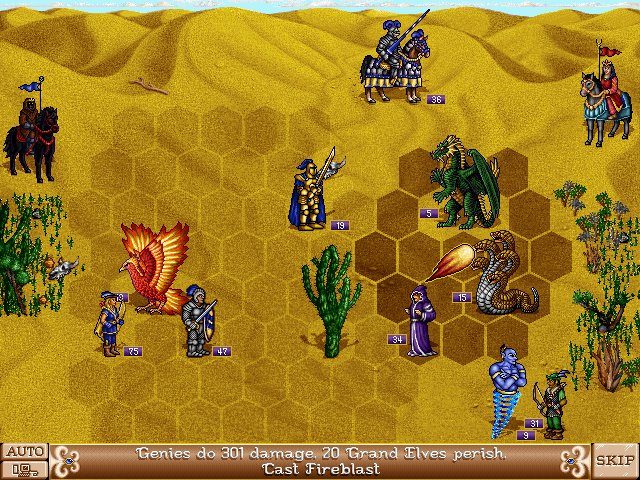
Figure: Official fheroes2 in-game screenshot of the tactical battle screen, sourced from ihhub.github.io/fheroes2.
The editor got real quality-of-life work
If you make your own maps, 1.1.18 is mostly for you.
- Auto Playtest was reworked. Map makers can now choose which hero classes are used during test gameplay, and the team says they plan to turn that dialog into a comprehensive map-testing tool.
- The Editor’s Virtual Keyboard supports multiline text editing, which makes writing storylines and other long narrative content inside a map far less painful than typing character by character.
- The Hotkey dialog was redesigned with category selection, so hotkeys attached to a particular dialog are easier to find. A configurable Delete hotkey was added too, which sounds trivial until you have used a keyboard layout where Backspace and Delete are not the same key.
The bundled map collection also grew by five new maps, with four existing maps updated with corrections supplied by their original creators. More than 60 issues were closed since 1.1.17.
Installing it on Linux
Flatpak (recommended, and the Steam Deck route)
flatpak install flathub io.github.ihhub.Fheroes2
flatpak run io.github.ihhub.Fheroes2
This is the smoothest path and the one the project recommends. On first launch you choose your resource source. For a manual install, copy ANIM, DATA, MAPS and MUSIC into ~/.var/app/io.github.ihhub.Fheroes2/data/fheroes2. The install guide also notes that a graphical app manager such as Discover works for this — and Discover is available on Steam Deck, which makes this the most convenient route on Valve’s handheld.
Debian 13 / Ubuntu 24.04 and newer
apt install fheroes2fheroes2 ships in the contrib repository for Debian since version 13 and Ubuntu since 24.04. The caveat in the official documentation is worth repeating: these distributions may not carry the very latest engine version because of their release cycles. If you want 1.1.18 the moment it lands, Flatpak is the safer bet.
Arch Linux
yay -S aur/fheroes2Or the manual route: clone https://aur.archlinux.org/fheroes2.git, then makepkg -si.
Homebrew on Linux
brew install fheroes2Copy the resource directories into $XDG_DATA_HOME/fheroes2 (usually ~/.local/share/fheroes2), or run the bundled /usr/share/fheroes2/download_demo_version.sh to pull down the free demo.
Gentoo
Add games-strategy/homm2-gold-gog GOG-EULA to /etc/portage/package.license, then:
sudo emerge -av games-strategy/homm2-gold-gogThat pulls games-engines/fheroes2 in as a dependency. The flac USE flag decides whether the soundtrack uses FLAC or OGG. For the demo instead, use games-strategy/homm2-demo with the HoMM2-Demo license line.
ZIP archive and packaged resources
Prebuilt archives exist for both x86-64 and arm64 (fheroes2_ubuntu_x86-64_SDL2.zip and fheroes2_ubuntu_arm64_SDL2.zip) on the GitHub releases page. If you would rather distribute the resources system-wide, the game-data-packager program builds a homm2-data package from an installed copy of the original game.
The same project also ships Windows installers, macOS builds (Homebrew, MacPorts, ZIP, native app bundle) and builds for Android, PlayStation Vita and Nintendo Switch — a reminder that fheroes2 is not Linux-exclusive, just unusually complete on it.
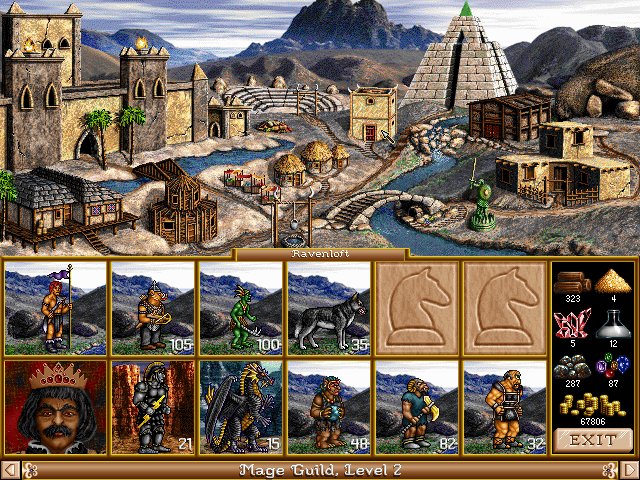
Figure: Official fheroes2 in-game screenshot of the castle screen, sourced from ihhub.github.io/fheroes2.
Verdict
fheroes2 1.1.18 is a strong release for a project that many Linux players only know as “the way I play HoMM2 without DOSBox”. The AI work is the part that genuinely changes how the game feels — a cleverer opponent that no longer cheats, while the easy end of the difficulty scale finally stops punishing you for stepping away from the desk.
And the release cadence matters more than it sounds. A monthly-maintained open-source engine is a very different proposition from one that updates twice a year, because the map community, the translation team and the compatibility fixes all depend on that rhythm. If you shelved HoMM2 because the project looked half-abandoned, 1.1.18 is the version worth coming back for.
Comments
The ‘endless waiting’ line in the release notes is refreshingly blunt — most projects just quietly skip a beat and hope nobody checks the tag dates. Glad the personal matters got sorted, because the AI improvements in 1.1.18 are the part I care about most; HoMM2’s original AI was always so passive about expanding that it made early-game lobbying trivial. Also good to see the engine/data split restated clearly. I keep a browser site of classic games playable without installs and the licensing story is the first question people ask, so having projects like this spell it out in plain GPL vs CC-BY-SA terms genuinely helps.